Every time the fire alarm rings, men of Oakland voluntarily leave their dinners, jobs, beds and homes to respond to an unknown danger risking their lives in the confrontation of a fire or an accident. Shades of the World Trade Center disaster. Far too often we take them and their protection of all of us for granted. But consider for a moment if there was no fire department in Oakland and no volunteers to respond to your call.
Who are these men and why do they do it?
Some will secret to the observer that it was a childhood dream to be a hero while others will somberly tell that it was their dedication to Oakland that motivates them. Perhaps others may quietly admit to the thrill of danger or the camaraderie that led them to be the firemen of Oakland.
Regardless of motivation, common traits of those who serve are simply dedication and professionalism. The initial training is long, difficult and extensive and it never ends as the science of saving your life and property and mine is ever advancing. It requires a commitment and a courage infinitely beyond childhood dreams or mere camaraderie. It requires the right stuff and the volunteer firemen of Oakland have it. Mere thanks and praise somehow seem to be pitifully inadequate for the invaluable service they render for every resident of Oakland and beyond.
I am honored to write this history and to have a member of the Oakland Fire Department as a friend. Following is their story and the proud history of their first century of service to this community.
The Origins of the Oakland Volunteer Fire Department
On April 8, 1902 Oakland officially became an independent borough and set out into the uncharted waters of creating a viable political entity and government for of 586 people within 9.2 square miles. None of the things and services of Oakland we take for granted today existed, including a fire department.
There were neither fire codes nor firemen for a community that used wood and coal for heating and candles and oil or kerosene lamps for light. Open fires were commonplace. Those were dangerous times as an errant spark typically brought a fiery ruin to the home or barn. Attempts to save people and buildings were limited to a hastily formed and ineffective bucket brigade of concerned neighbors.
History records that in November, 1903 a major fire was discovered at the large barn of the Calder estate then located where the Coppertree Mall is currently situated. Although and informal alarm was sounded and a bucket brigade was formed, it was a futile attempt. In that it was the largest fire in Oakland to date, the need for a fire department in Oakland became apparent. But because there was town building to do and other priorities at the time, the formation of a fire department had to wait.
However, the discussions and the need were not extinguished as six years later on June 10,1909 a informal meeting was held at Ivy Hall, the then Oakland municipal building, to create a volunteer fire department in Oakland. Ludo Wilkins, the owner of the Wilkins Brush Factory in Oakland, was appointed as the first fire chief. And he served six terms as chief until 1916.
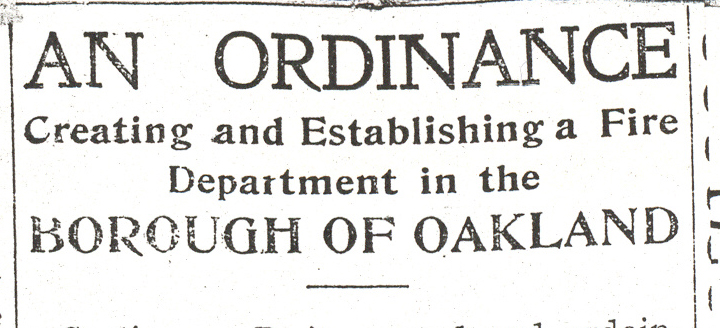
It needs to be noted that the initial formation of the fire department in 1909 was a serious but informal affair and would not be officially associated with Oakland for another 2 1/2 years. In December, 1911 the Oakland Volunteer Fire Department was officially born with the passage of an ordinance by the mayor and council establishing it as a formal part of this borough.
Over the years maintaining the number of effective firemen was not without an occasional problem. By 1920 interest in the fire department began to lag, and more often than not, a quorum could not be obtained for meetings. This manpower shortage threatened the very existence of the OVFD. That unfortunate situation would continue until Harry Gale McNomee began a successful campaign to re-ignite interest. By 1935 Mr. McNomee became fire commissioner, the only exempt fireman ever to hold the office. He served five years, during which time many highly useful facilities and pieces of equipment, both for fighting fire and for the protection of the firemen, were purchased.
The OVFD suffered another severe manpower shortage during WW II as the men of Oakland went off to war. The complement of active firemen was reduced to eight volunteers with typically only two available during working hours. Consequently seniors and women were recruited to serve in the Oakland Fire Reserves in the thirteen fire districts to assist in fire fighting and to also serve in the event of an air raid.
Training
Because every fire has the potential to kill, each member of the OVFD today, a candidate must complete 200 hours of intensive fire fighting training in Mahwah. And, for a lengthy time, he is a probationary firemen gradually assimilation into his Company. And because the science fire fighting is constantly evolving, weekly drills to learn of new techniques, methods and equipment are mandatory. But formalized, mandatory training, drills etc. has not always been the norm.
For a number of years, before the formation of the First Aid Squad, the department was summoned to aid in asphyxiation cases because of the fact that they had the only resuscitator in the borough. Every fireman was required to satisfactorily complete a First Aid course.
Firehouses
Firemen and fire departments need firehouses and the requirements of the first intrepid volunteer firemen of Oakland were no different.
In 1909 the OVFD was a fire department on paper and in name only as there was
neither equipment nor firehouse. The volunteer firemen themselves were only a determined group of bucket brigade veterans without training. This fledgling fire department had men, an organization and a will to succeed born of necessity and desire to protect their neighbors and selves. That will to succeed was partially manifest two years later. In the interim a fireman’s ball was held in December, 1910 that raised $300, sufficient to purchase the land for the firehouse from Mr. David C. Bush with funds remaining toward the construction materials. On June 11, 1911 a committee was appointed to supervise the construction of the first firehouse. Gideon DeWitt was the builder while the firemen themselves lent muscle and expertise to the actual construction. On January 1, 1912 Mayor Edward page officially accepted the deed to the new firehouse and took grateful possession on behalf of Oakland.
Initially it was a simple, single story building located across from the current Company 1 firehouse on Yawpo Avenue. But over the course of the next several decades time, the growth of Oakland and events would conspire to dramatically create change.
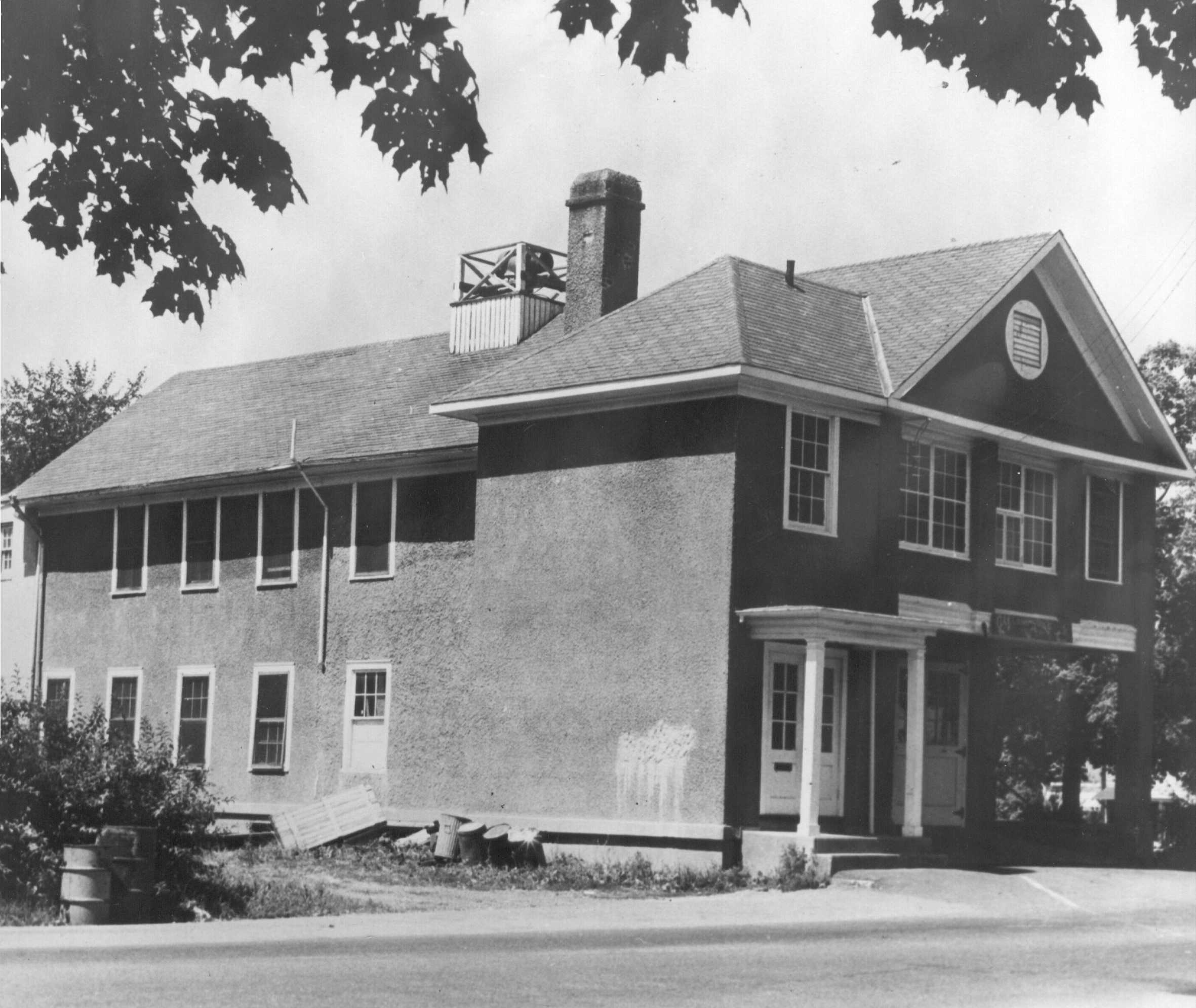
In 1922 a fire completely destroyed Ivy Hall. Left without a place to conduct official business, a decision was made to expand the firehouse and move the Oakland offices to it. The firehouse was doubled in size and a second floor was added. Over the years and after several expansions it was used as the municipal offices of Oakland, the police department, a voting place, a hall for public affairs, a gym for the Oakland Military Academy, Oakland’s jail and in 1939, it served for many years as the home of the Oakland Library. Additionally, new fire fighting apparatus was bigger, better and heavier.
Even as the old firehouse was expanded and served as an all-purpose building, the OVFD consistently lobbied and petitioned for a firehouse dedicated for their own use.
By 1944 the original firehouse would be reinforced to accommodate a new fire truck and again in 1954 when it was expanded adding 4 rooms in the rear of the building. Hence the original single story building had grown in both size and importance from a simple, single-story firehouse to literally a building housing virtually every major official function of Oakland. And by this time the population of Oakland had grown from approximately 600 when the firehouse was originally built to almost 10,000. Something had to give.
By 1959 a new borough hall was built that housed the official offices of Oakland. The police department jail also moved out to the Ponds Memorial building along with the library. Still, an additional firehouse with more volunteers and equipment was sorely needed. Proposals were made and officially sanctioned to build an emergency services building to house both the fire department and the ambulance corps. This initiative was also opposed by the OVFD.
In the same year funding as approved to erect an additional firehouse on Hiawatha Blvd for Company 2, the Home of the Ironmen, which was subsequently designated as the Arthur H. Bunger Memorial Firehouse in 1979. And it too was expanded in 2002.
What remained was an aging, wooden building that was clearly inadequate to accommodate the fire fighting equipment to serve a population that had grown nearly 1700% since it was first built. Mr. John Sarcka, the owner of the Oakland Military Academy, expressed an early interest in the building as it was adjacent to the Academy. Unfortunately, his efforts wee too late.
Thus in 1965 funding was approved to erect a new firehouse to be built on a parcel across the street from the original. That location was a result of a and swap that accommodated the both needs of the fire department and the developer who was to build the Coppertree shopping center. The new Ben H. Wood Firehouse was completed in 1966 and modified in 2000 to accommodate the new Seagrave Aerial.
In 1984 a new 2-bay firehouse, the John L. Bigley Memorial Firehouse, was built and donated to Oakland by the McBrides in the McBride Industrial Complex off of Longhill Road. Although not staffed, it is employed as a training center and houses important equipment and apparatus.
Fire Alert Systems
An system to alert volunteers to the existence of a fire was an absolute necessity confronted by the founders in 1911. There were only a few telephones installed at that time and electricity would not arrive for another 5 years. The immediate solution was the erection of 3 locomotive rings in strategic parts of Oakland. In 1917 the OVFD Ladies Auxiliary donated a new, 1,280 pound fire bell to be placed in the firehouse belfry. However, it could not be installed because of its great weight and was subsequently made as a replacement of the locomotive ring near the railroad station. It served proudly there until 1925 when it was replaced by a siren in the belfry of the firehouse. Nonetheless, it and the other locomotive rings were kept in reserve until 1936 when they were officially retired with honor.
By 1942 WW II was in full rage with iron, copper and tin sorely needed to build ships, tanks and weapons. In November of that year the men of the Oakland Volunteer Fire Department voted to donate the original locomotive fire rings and the original fire bell to the war effort thereby forsaking a priceless pieces of their heritage. The fire alarm rings proudly standing in front of Yawpo and Hiawatha firehouses were unearthed in Oakland many years ago. Although not the originals, they are proud reminders of the roots and dedication of the OVFD of the men who responded to their alarms,
With the growing availability of telephones in Oakland, the siren alert system was augmented by the civic-minded Art Seel who owned a tavern on the NE corner of Ramapo Valley Road and Yawpo Avenue. He was the connect point between a reported fire and the initiation of a response. A citizen could simply dial #5831 to reach Mr. Seel who in turn would personally call the fire chief, police chief, etc. They in turn would activate the fire siren. If insufficient firefighters arrived, Mr. Seel would then personally call every fireman to alert them. Although not an active firefighter, Mr. Seel was nonetheless made an honorary member of the OVFD in recognition of his dedication and service.
This effective but relatively ad hoc alert system was replaced in 1952 by a combination of a new and more reliable siren network coupled with a new telephone alert system. Telephones with a special siren activation button were placed in the homes of key first responders such as the fire chief, police chief, etc. The new siren network could be activated by simply pushing the special button. That system was ultimately replaced in the 1970s by Instalert radios to call first responders. And the Instalert radio system in turn was phased out in the late 1980s in favor of pagers that were issued to every fireman.
While many then believed that the pager system would cause the demise of the fire sirens, it was not to be. Currently the Oakland Office of Emergency management is sponsoring the Modern Audible Emergency Alert System based in part upon advanced siren technology using directional sirens. It’s used for fires, school closings and as a warning system.
Notable Fires
The Oakland Volunteer Fire Department has responded to countless fires over the last century. While no fire is ever considered routine, some are remembered more than others. The following standout in the collective memory of the OVFD.
The first in this category was really two fires occurring simultaneously in 1916 when the barns of Charles Sheffield and Edward Page caught fire at the same time. This situation overwhelmed the men, primitive equipment and leadership of the new Oakland Volunteer Fire Department as both structures were lost completely.
A disastrous fire struck the magnificent Page estate house nine years later in 1925. It was located at the highest point of the current Hiawatha Blvd. At that time it was Mount Melchesidech, a Catholic seminary preparing students to be priests. The cause of the fire was unknown and the difficulty in fighting the fire was magnified by the distance of water from its private reservoir. Although fire companies from Pompton Lakes and Wyckoff responded to assist, the wood structure building was completely lost. All that remained was a stone library addition to the original house that was used as a chapel by the seminarians. Ultimately the land was sold for real estate development and the chapel became the Mountain Lakes club house which in turn was ultimately destroyed by fire.
Tragedy struck Oakland on March 4, 1942 when Osmond Edward Saunders died in a fire in his home. It was the first fire-related fatality of the OVFD. It was an extremely intense fire and was fanned by high winds which in turn ignited field fires.
Four years later in the Spring of 1946 the mountains were ablaze with a forest fire near and north of Skyline Drive threatening to engulf Camp Todd, Camp Tamarack and Camp Glen Gray. The fire burned for four days and, with the help of many volunteers, forest rangers and even boy scouts, it was finally brought under control by the use of controlled backfires to eliminate combustible materials in the path of the major fire.
In the winter of 1978, there was another major fire in the area immediately south of Skyline Drive. The current Ramapo Forest containing Ratten Pond was once a private hunting and preserve. A large guesthouse, built years earlier on an island in the center of the lake, was ablaze from unknown origins. Although the lake was frozen, there was nothing within a margin of safety that the firemen could do. It was left to safely burn itself out since it was entirely surrounded by water.
The home of the Oakland Elks Club, a fraternal and charitable staple in Oakland for many years, caught fire on a foggy night on March 11, 1980. This fire on Route 202 was not quickly discovered due to the fog and when finally reported, the building was fully ablaze. Although Chief Bernie Hickey immediately made a request for assistance from the Pompton Lakes Fire Department, it was too late to save the structure. The current Elks Club building rose as a Phoenix upon the same location.
Pleasureland was a major attraction during Oakland’s heyday as a river-beach resort town. It was developed during the 1930s from the remains of the Wilkins Brush Factory which, in turn, was built on the site of a hay farm. Accordingly there was a large, three-story barn that survived through these transitions. In 1987 the abandoned barn was reported to be ablaze precisely at the same time as a meeting of the OVFD. The barn was fully engulfed in flames. Although calls immediately went out to several surrounding communities for assistance, they were to no avail as the 100 year-old barn was completely destroyed.
Fire Fighting Equipment
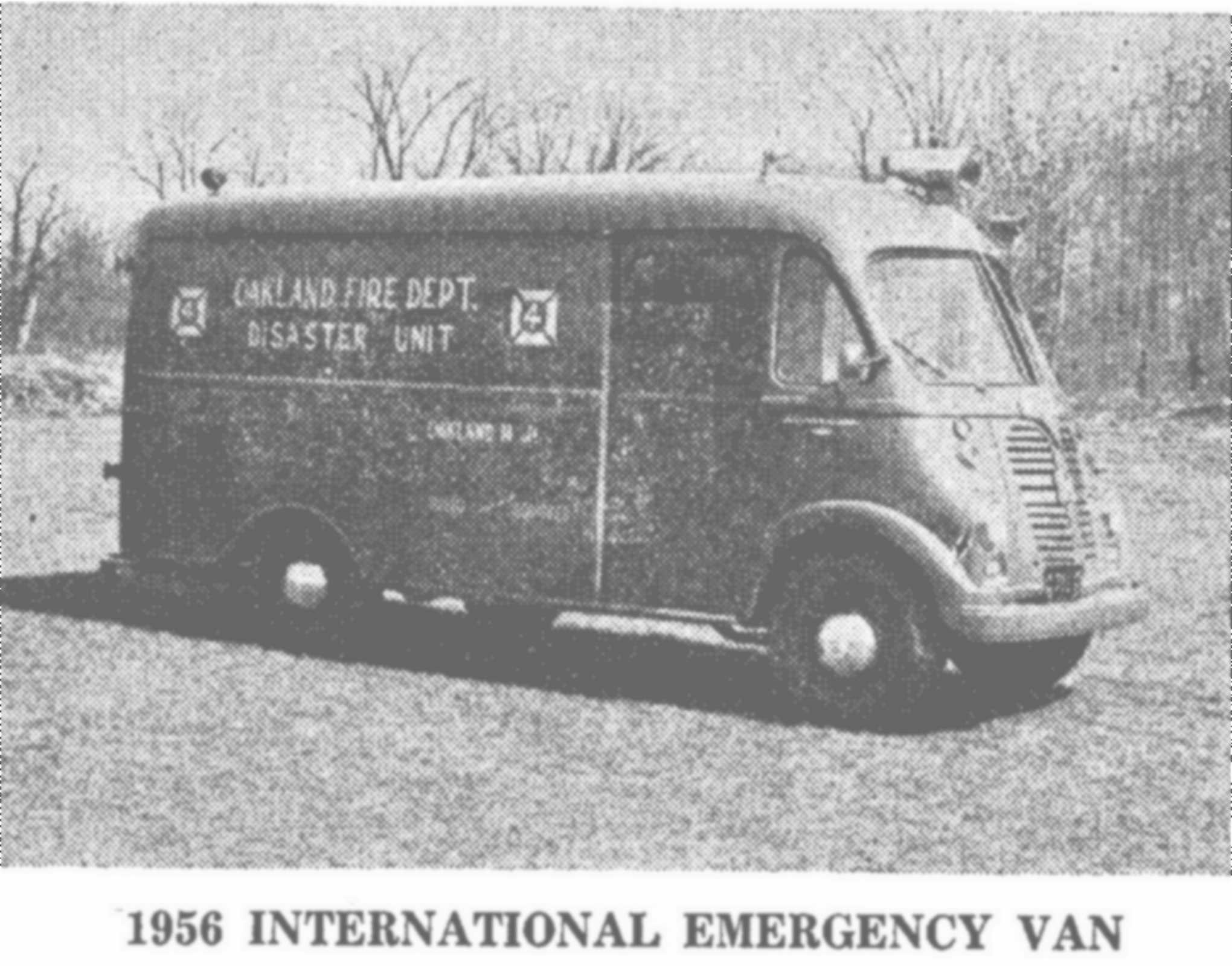
When the OVFD was initially formed, it literally had nothing beyond a few good, dedicated and determined men who sought to make a protective difference in this community. The original ‘equipment’ of the OVFD virtually consisted of some well-worn water buckets and a few fire extinguishers. Better equipment was needed. The OVFD raised $210 themselves via charitable events, oyster supers, etc. to purchase a hand or horse drawn 50-gallon mobile soda-acid tank.
In 1916 the need for better equipment became apparent after the simultaneous fires at the Sheffield and Page barns. Shortly thereafter, the borough purchased a hand- cranked 1917 Ford Model T truck that carried approximately 30 fire extinguishers and a few firefighters. In 1920 the mobile capabilities of the soda-acid tank were upgraded by the generous donation of a 1920 Charmers automobile by Mrs. Remington Vernam. And even that was not without risk as occasionally the tank would be upset by excessive speed. Consequently, fire fighting capabilities were augmented by the placement of two and one-half gallon fire extinguishers in various homes throughout the borough.
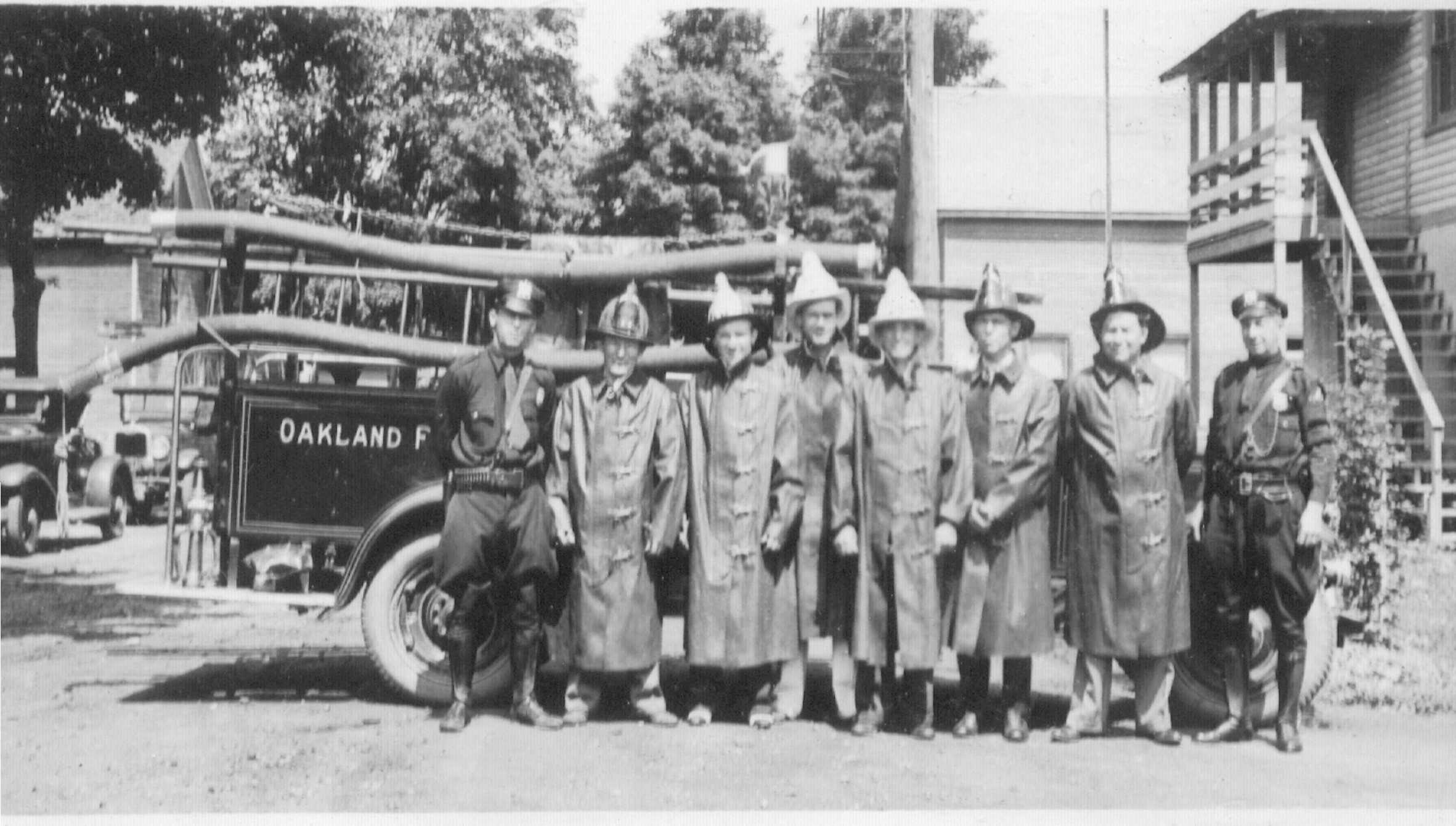
Still, capabilities were limited to the capacity of the extinguishers and the 50-gallon mobile soda-acid tank. Even combined they were inadequate to fight a large fire. In 1925 the first true pumper was purchased by Oakland. This was augmented in 1929 via the purchase of a Chevrolet 350 gpm pumper. Both trucks enabled the OVFD to continuously use any available natural source of water to fight a fire. It was a serious limitation since Oakland then did not have a municipal system.
The methods and capabilities to fight fires in Oakland changed forever in 1931 as eight miles of water mains and 80 fire hydrants were installed. For the first time a continuous source of water would be available throughout the entire borough. No longer would our firemen be restricted to either carrying their own water and chemicals to a fire or limited to obtaining water from ponds, brooks and streams. New pumpers connecting to hydrants could now be deployed to fight fires and protect lives. Today there are approximately 500 fire hydrants connected to over 60 miles of municipal water mains in Oakland.
Ladies Auxiliary
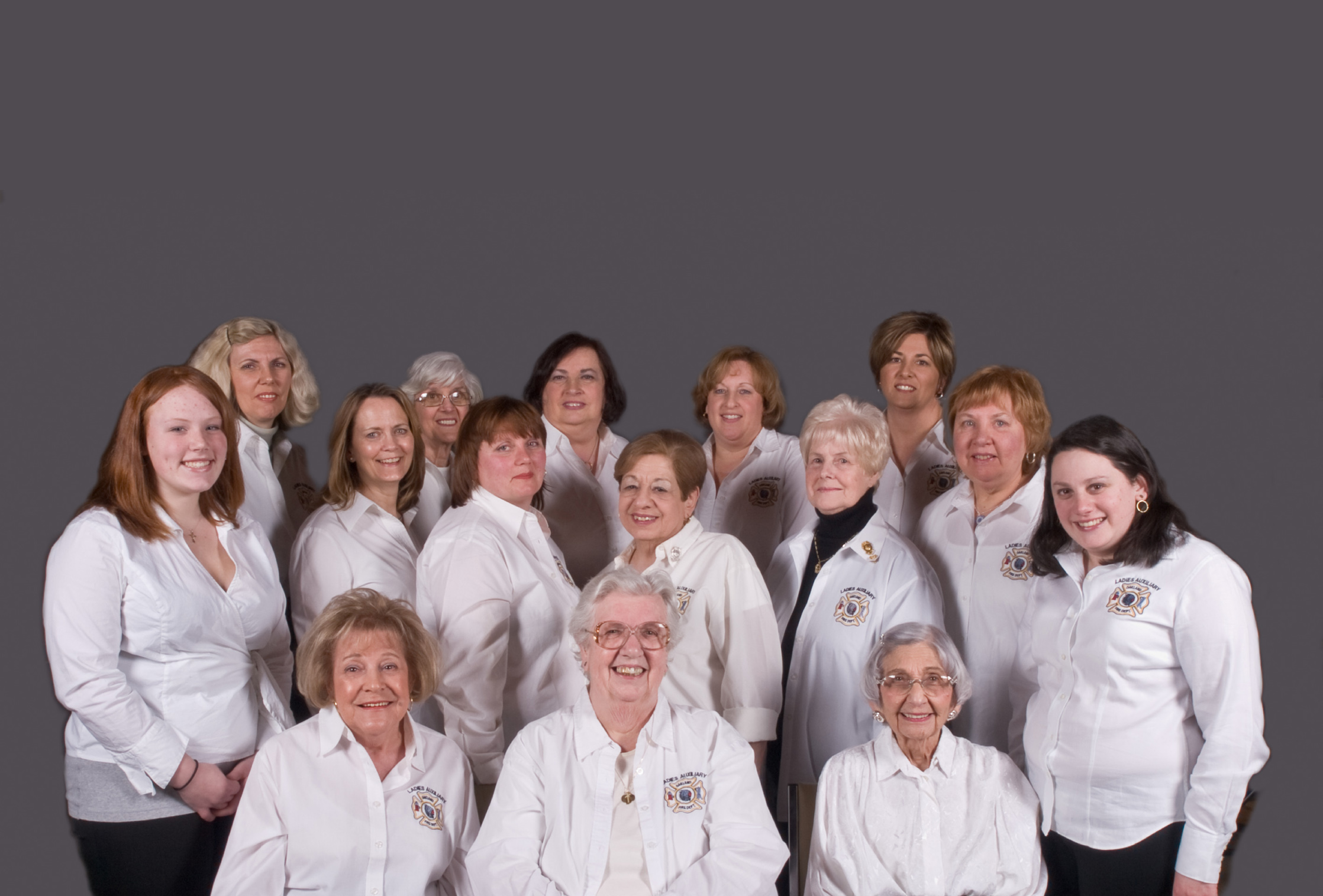
Shortly after the OVFD was established, many women of Oakland banded together to form the Ladies Auxiliary of the Oakland Fire Department. The initial purpose of this fine group was to assist in the raising of funds to support the efforts of the OVFD and to assist in the purchase of new equipment. Most, if not all, were wives of the founding charter members of the OVFD.
The first and important accomplishment was the raising of funds to purchase Oakland’s first fire alarm bell in 1917. Cecelia Munn, Nellie Hopper and Cora L. McNomee formed the committee appointed to purchase the bell. Over the years the Ladies Auxiliary continued to directly support the volunteers of Oakland’s fire department. This was particularly exemplified during WW II when many served as volunteers to directly assist the OVFD to extinguish fires.
For 100 years the Ladies Auxiliary has and continues to provide an invaluable service to the volunteer firemen of Oakland. Oakland and the OVFD are simply better because of their constant support and activities.
Mutual Aid
Because no community is capable of handling every potential fire type and size, Oakland has had long history of mutual aid. While assisting and receiving fire assistance from neighboring communities since its inception, the OVFD received formal authority do respond to fires in neighboring communities as early as 1940. This ultimately grew into the North West Bergen Mutual Aid Group.
In 1991 the OVFD was called upon to respond to a very dangerous situation involving a major gasoline spill in Oakland as a result of an accident between tanker truck and an auto. The driver was trapped while 4,000 gallons of gasoline were spilled on to several streets and into a nearby stream. Disaster was averted through the efforts of the OVFD and those of surrounding communities via multiple Mutual Aid responders.
Its mutual aid capabilities extended to New York City and were tested with the 1993 bombing of the World Trade Tower. It was a text book response. The Oakland First Aid Squad and OVFD Rescue Truck assembled at a predetermined location in Haledon along with personnel and equipment from other communities. Once assembled they left en mass for New York City where they were re-assembled into a larger group to travel to the scene of the disaster.
Outstanding mutual aid was again illustrated in 1997 with a major fire in a shopping center in Pompton Lakes. The construction of the buildings aided in the speed of the fire development. Immediately a call for assistance was made by the Pompton Lakes Fire Department to surrounding communities. Oakland responded instantly with a snorkel engine and a high power pumper to feed it.
These are merely two typical examples of the mutual aid capabilities of the OVFD. This level of cooperation occurs often although typically unknown by many residents. In a similar vein the OVFD has associated itself with many fire departments and organizations to extend mutual knowledge of fire hazards, fire fighting techniques, training procedures, apparatus and equipment knowledge and fire ground coordination.
Emergency Aid
Fighting fires is merely one responsibility of the OVFD.
In 1953 when most electricity was lost due to an ice storm, men of the OVFD manned the firehouse to receive any calls of a fire while also providing auxiliary lighting for electrical repair crews. During the floods of 1955 theses men evacuated families along the Ramapo River, housed the homeless in the firehouse and even obtained bedding for these newly displaced families. This degree of emergency aid is initiated on every occasion of river flooding.
In more recent memory the OVFD was called upon to assist following a shooting incident at the FRG Complex to find and assist the wounded and, as dark fell, to provide lighting and crowd control. In 1991 it responded to a very dangerous situation involving a major gasoline spill as a result of an accident between tanker truck and an auto. The driver was trapped while 4,000 gallons of gasoline were spilled on to the street and into a nearby stream. Disaster was averted through the efforts of the OVFD and those of surrounding communities via multiple Mutual Aid responders.
Tropical Storm Floyd in 1999 again tested the OVFD non-stop in several ways from rescues and evacuations to preventing a potential disaster in the Ramapo River Reserve. Much of the Reserve is built on mountain rock with a very thin layer of soil and shallow-rooted vegetation. A mudslide occurred, proceeded into a private home that inturn ruptured a gas line. The entire complex was safely evacuated and a potential disaster was averted when the gas main was turned off.
The Exempt Fireman’s Association
1950 witnessed the formation of the Exempt Fireman’s Association, an organization of the most dedicated volunteers. To be a member, a volunteer must have at least seven years of service with 60% attendance at fires and drills. Its primarily purpose is to provide representation for firemen on legislative matters and to provide a small but permanent death benefit.
Typical Generosity
Generosity has been a singular mark of the OVFD since its founding in 1909. While it has been and is expressed every day, two events particularly typify the character of the men of the OVFD.
And on September 11, 2001 members of both companies of the Oakland Vol. Fire Dept. left their daytime jobs and met at Station One on Yawpo Avenue waiting and willing to do whatever they could to help the citizens of New York. Not satisfied that nothing could be done, the OVFD began an initiative to collect food, water, blankets and other useful items to aid the collateral victims. Not surprisingly, over 30 tons of goods were shipped from Oakland to NYC.
Again, this is an extraordinary albeit typical example of the generosity of the firefihghters of Oakland.
Into the Second Century of Service
The terror attacks of 9/11/2001 are a stark reminder of the perils and dangers that can arise without warning. The OVFD trains weekly with an ever-expanding agenda of training courses to protect Oakland and to act in concert with other communities in need of assistance.
To be sure the primary responsibility of the OVFD is centered upon preventing and fighting fires protecting both life and property. Over the years its responsibilities expand to encompass virtually all aspects of response including auto accidents, search and rescue, Haz-Mat and flood evacuations. While no one knows what the future holds, one can nonetheless be assured that the OVFD is preparing constantly for almost any contingency. We can sleep well secure with that knowledge.
 of the Calder estate then located where the Coppertree Mall is currently situated. Although and informal alarm was sounded and a bucket brigade was formed, it was a futile attempt. In that it was the largest fire in Oakland to date, the need for a fire department in Oakland became apparent. But because there was town building to do and other priorities at the time, the formation of a fire department had to wait.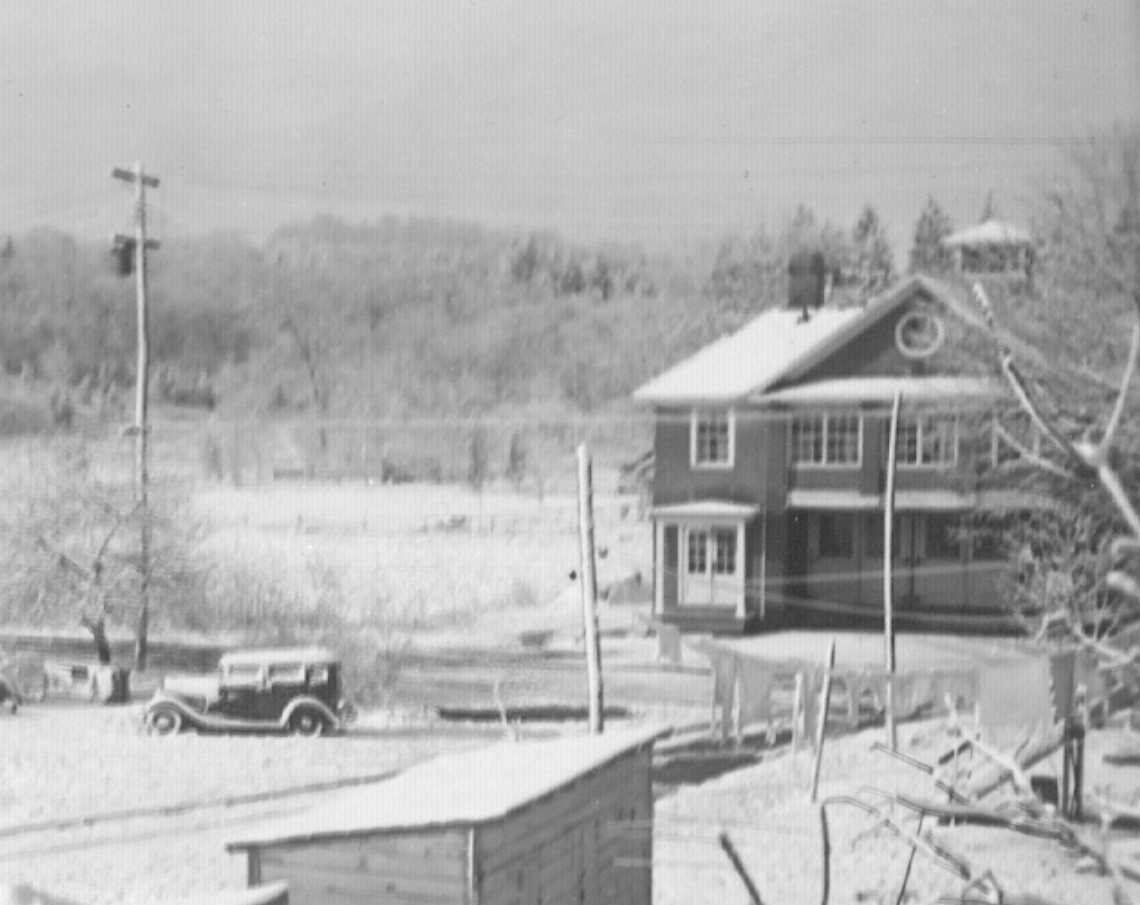
 that raised $300, sufficient to purchase the land for the firehouse from Mr. David C. Bush with funds remaining toward the construction materials. On June 11, 1911 a committee was appointed to supervise the construction of the first firehouse. Gideon DeWitt was the builder while the firemen themselves lent muscle and expertise to the actual construction. On January 1, 1912 Mayor Edward page officially accepted the deed to the new firehouse and took grateful possession on behalf of Oakland.
  In the same year funding as approved to erect an additional firehouse on Hiawatha Blvd for Company 2, the Home of the Ironmen, which was subsequently designated as the Arthur H. Bunger Memorial Firehouse in 1979. And it too was expanded in 2002.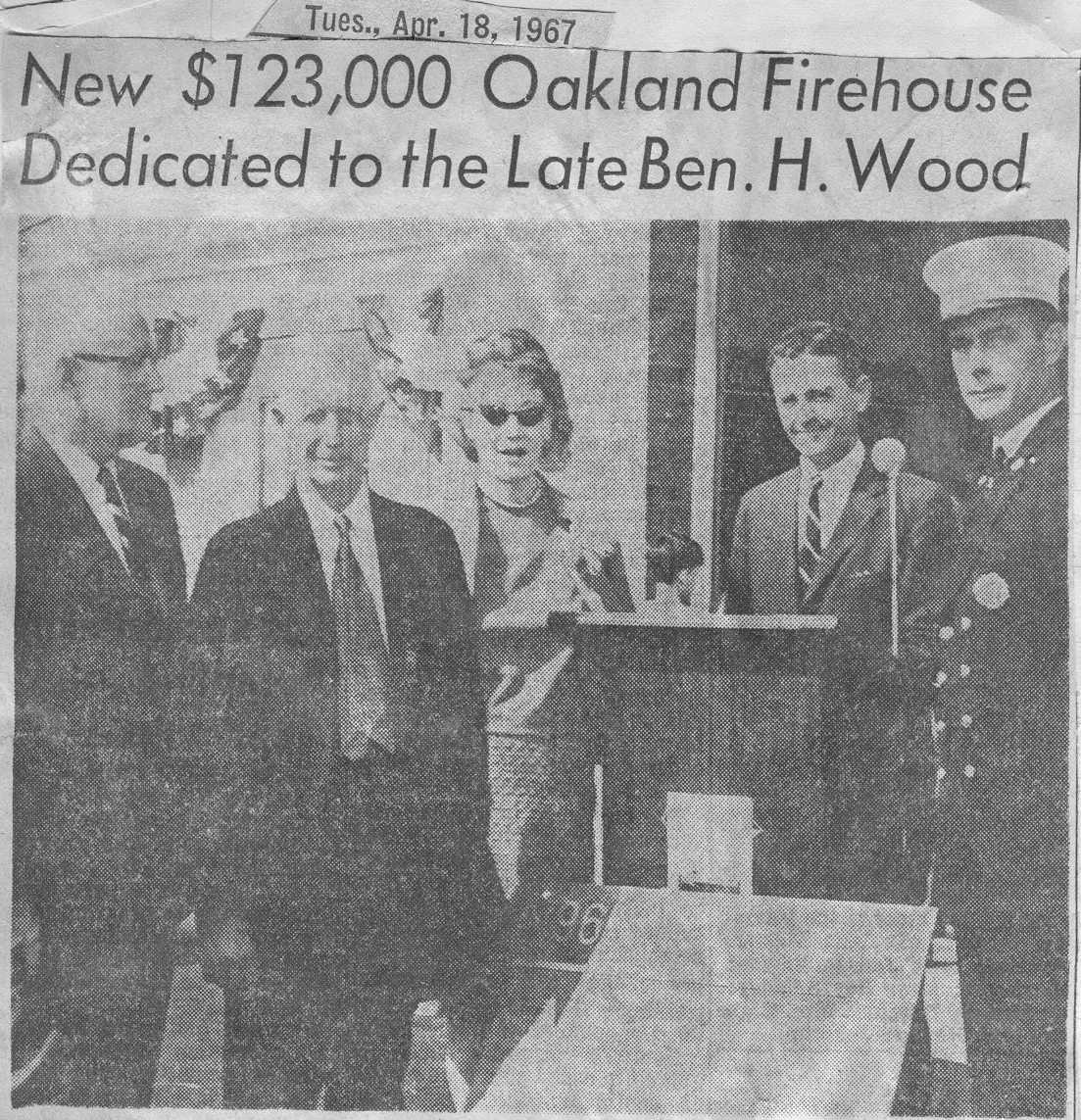
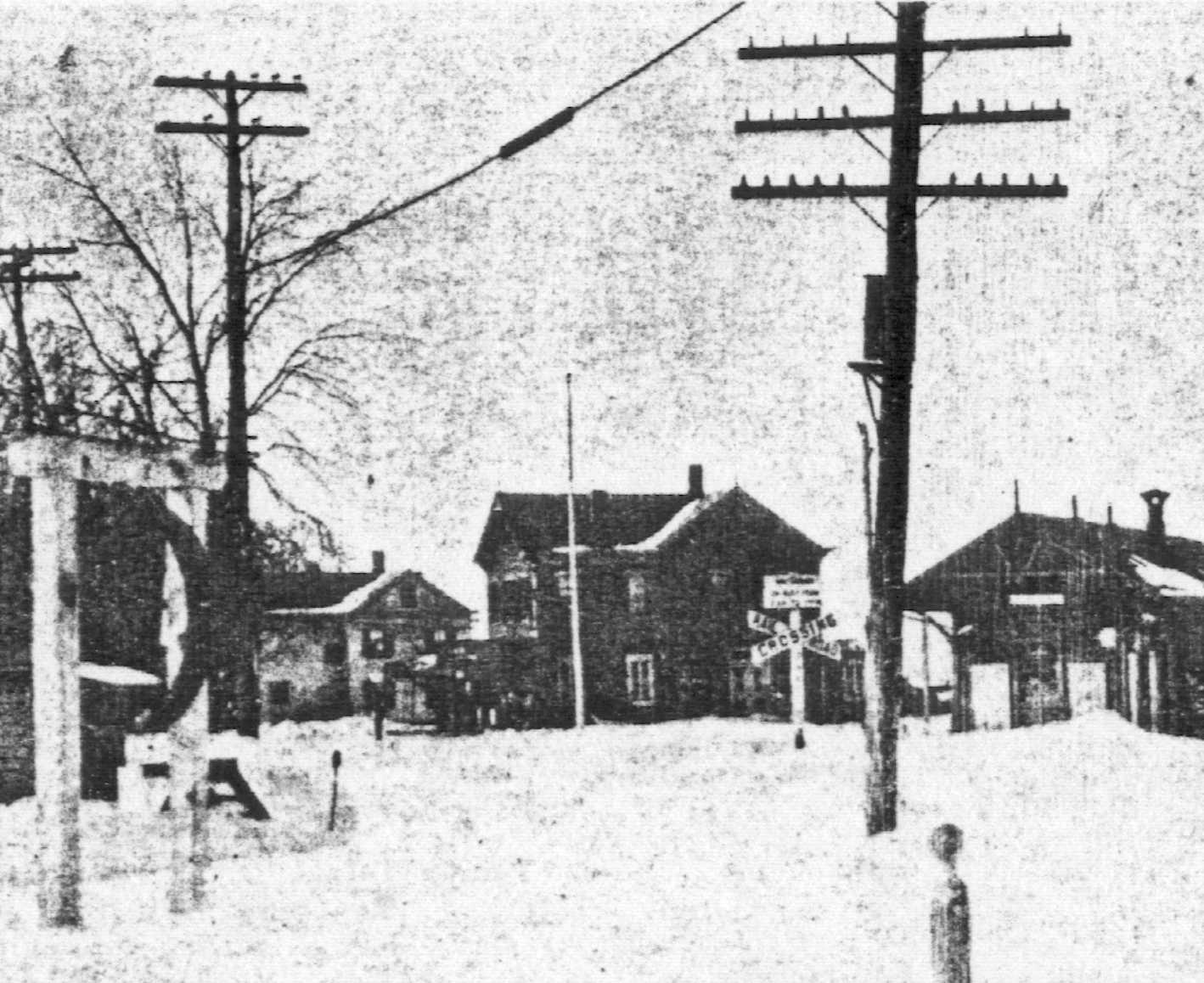 An system to alert volunteers to the existence of a fire was an absolute necessity confronted by the founders in 1911. There were only a few telephones installed at that time and electricity would not arrive for another 5 years. The immediate solution was the erection of 3 locomotive rings in strategic parts of Oakland. In 1917 the OVFD Ladies Auxiliary donated a new, 1,280 pound fire bell to be placed in the firehouse belfry. However, it could not be installed because of its great weight and was subsequently made as a replacement of the locomotive ring near the railroad station. It served proudly there until 1925 when it was replaced by a siren in the belfry of the firehouse. Nonetheless, it and the other locomotive rings were kept in reserve until 1936 when they were officially retired with honor.
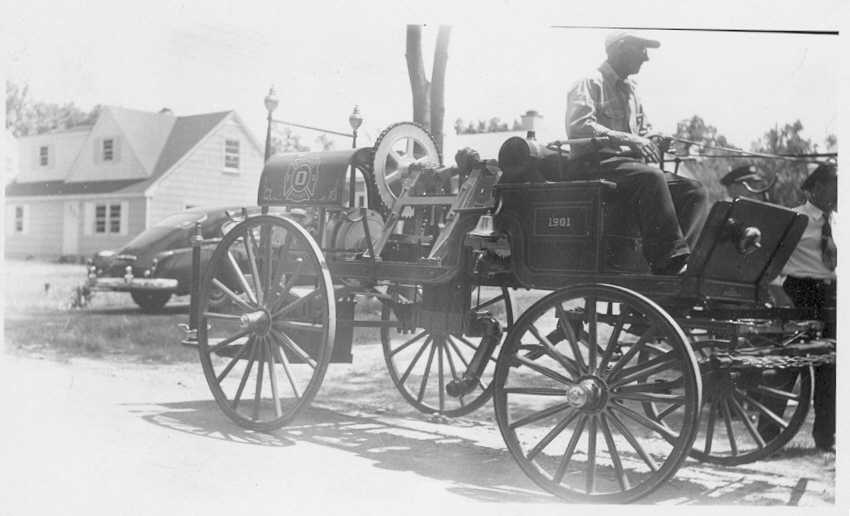 When the OVFD was initially formed, it literally had nothing beyond a few good, dedicated and determined men who sought to make a protective difference in this community. The original ‘equipment’ of the OVFD virtually consisted of some well-worn water buckets and a few fire extinguishers. Better equipment was needed. The OVFD raised $210 themselves via charitable events, oyster supers, etc. to purchase a hand or horse drawn 50-gallon mobile soda-acid tank.
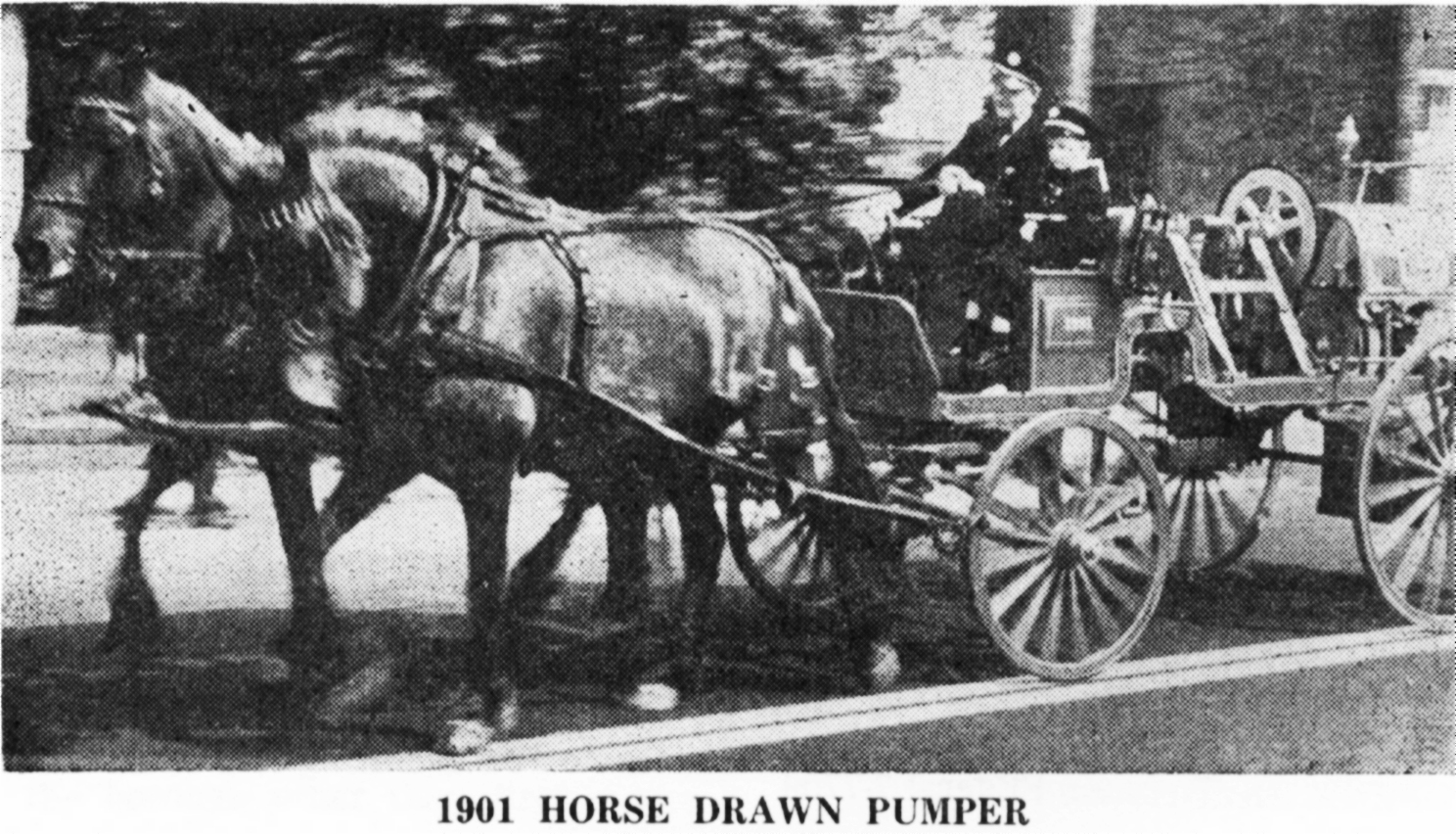 at the Sheffield and Page barns. Shortly thereafter, the borough purchased a hand- cranked 1917 Ford Model T truck that carried approximately 30 fire extinguishers and a few firefighters. In 1920 the mobile capabilities of the soda-acid tank were upgraded by the generous donation of a 1920 Charmers automobile by Mrs. Remington Vernam. And even that was not without risk as occasionally the tank would be upset by excessive speed. Consequently, fire fighting capabilities were augmented by the placement of two and one-half gallon fire extinguishers in various homes throughout the borough.
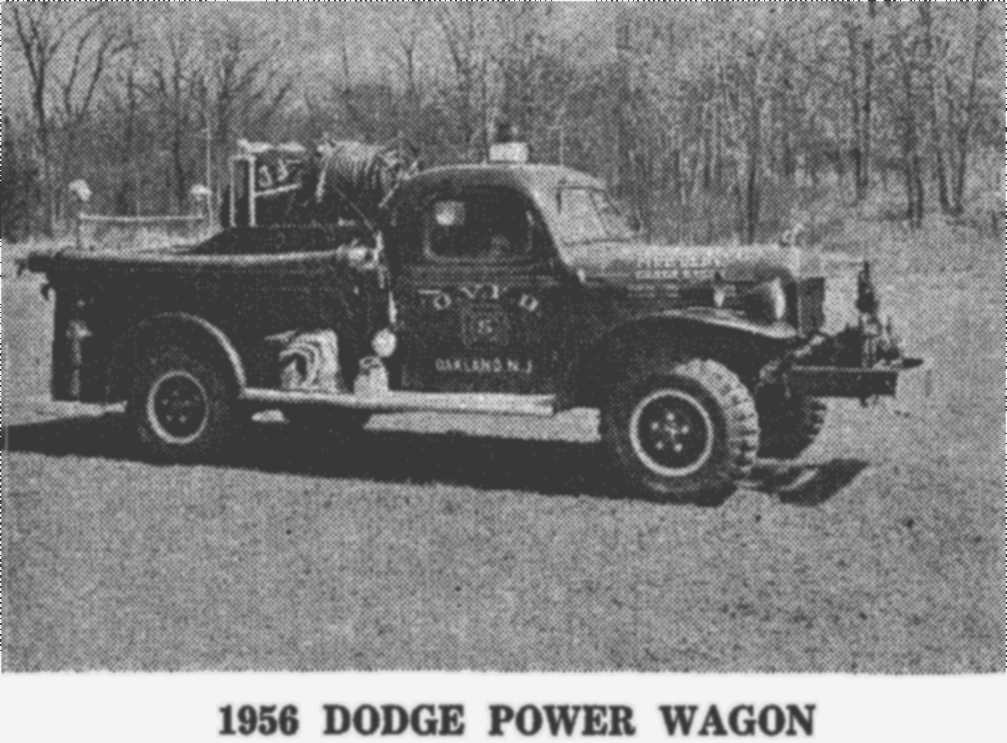 Still, capabilities were limited to the capacity of the extinguishers and the 50-gallon mobile soda-acid tank. Even combined they were inadequate to fight a large fire. In 1925 the first true pumper was purchased by Oakland. This was augmented in 1929 via the purchase of a Chevrolet 350 gpm pumper. Both trucks enabled the OVFD to continuously use any available natural source of water to fight a fire. It was a serious limitation since Oakland then did not have a municipal system.
 as eight miles of water mains and 80 fire hydrants were installed. For the first time a continuous source of water would be available throughout the entire borough. No longer would our firemen be restricted to either carrying their own water and chemicals to a fire or limited to obtaining water from ponds, brooks and streams. New pumpers connecting to hydrants could now be deployed to fight fires and protect lives. Today there are approximately 500 fire hydrants connected to over 60 miles of municipal water mains in Oakland.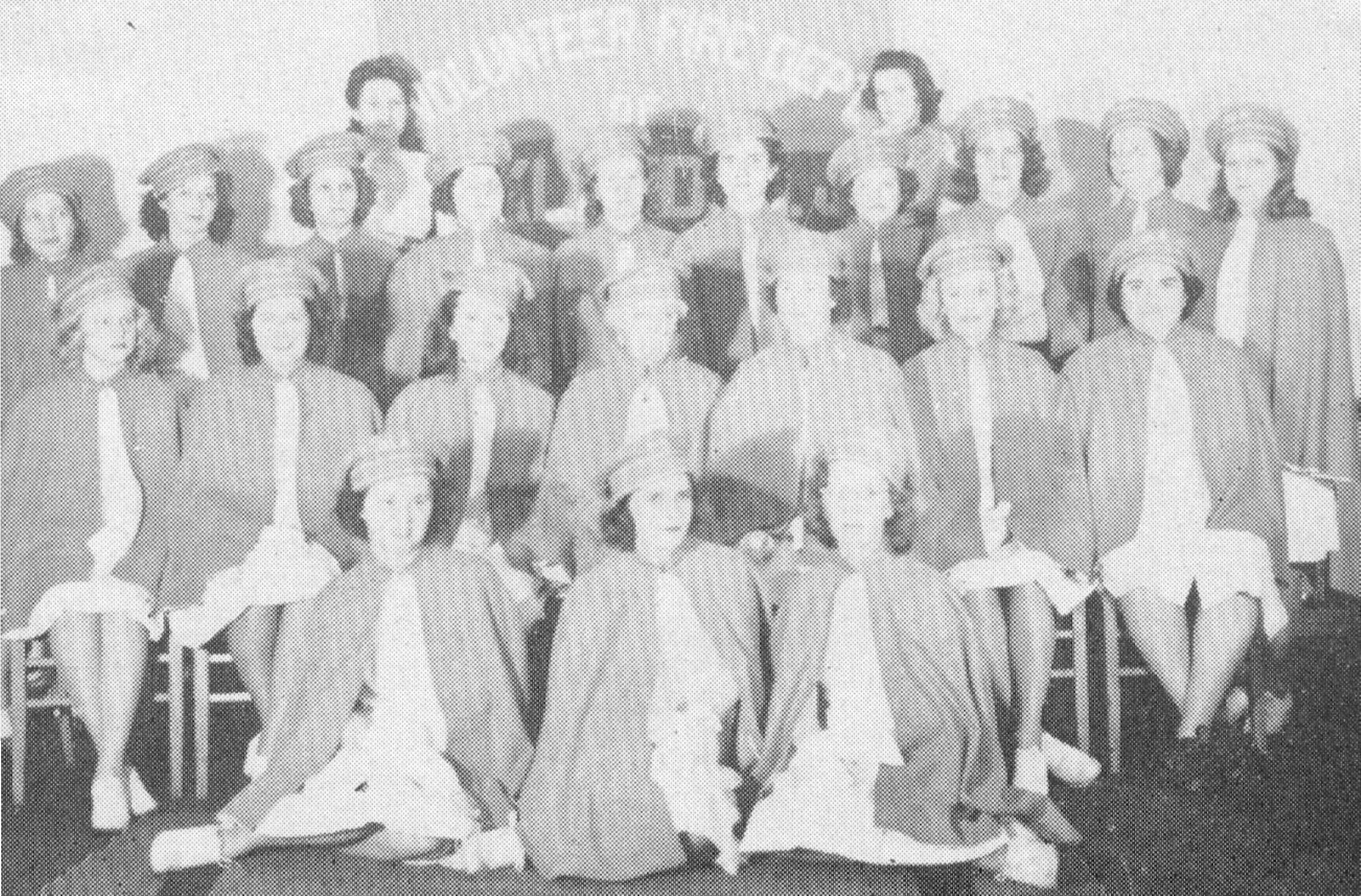
 constant support and activities.